

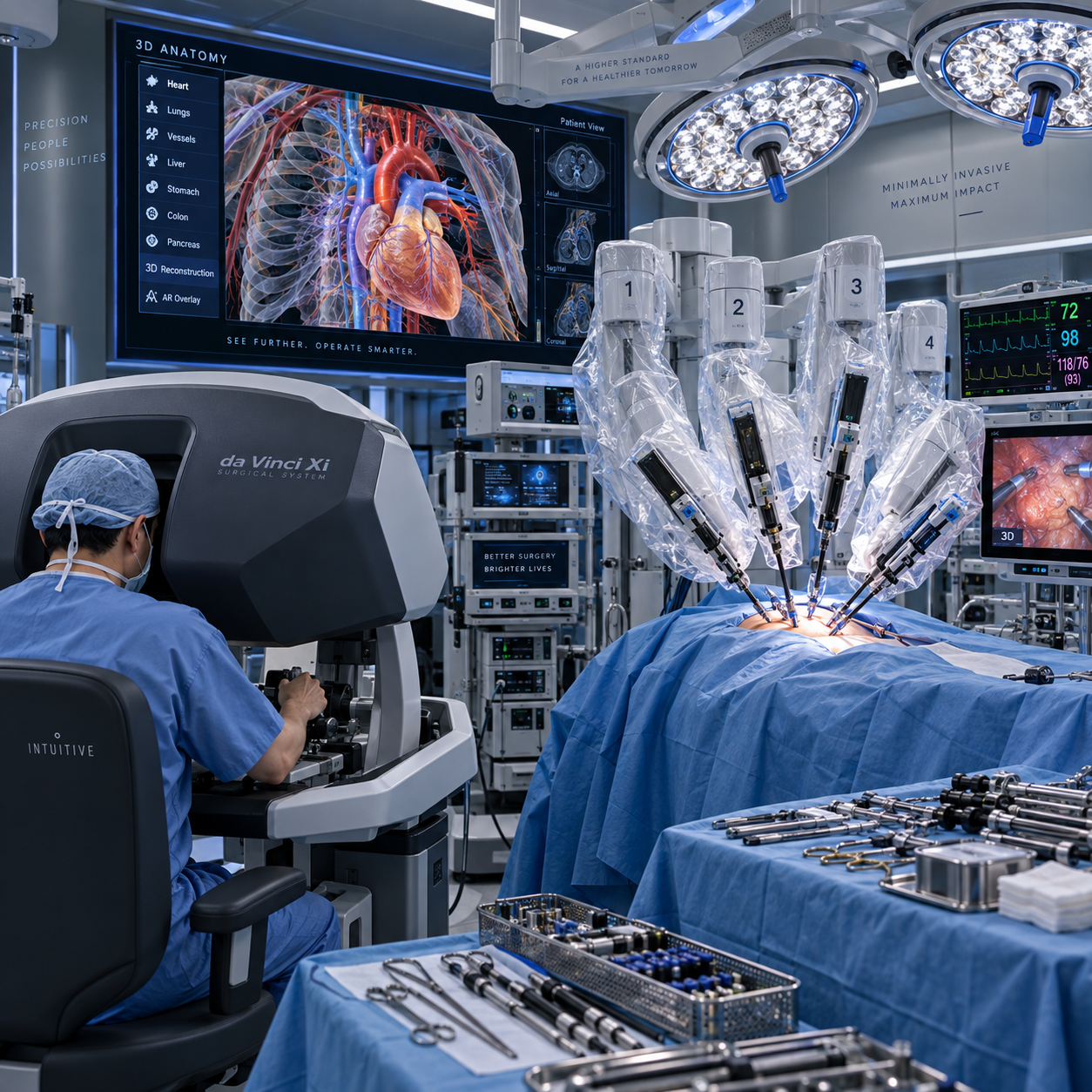
3D Printing in Medicine: From Prosthetics to Bioprinting
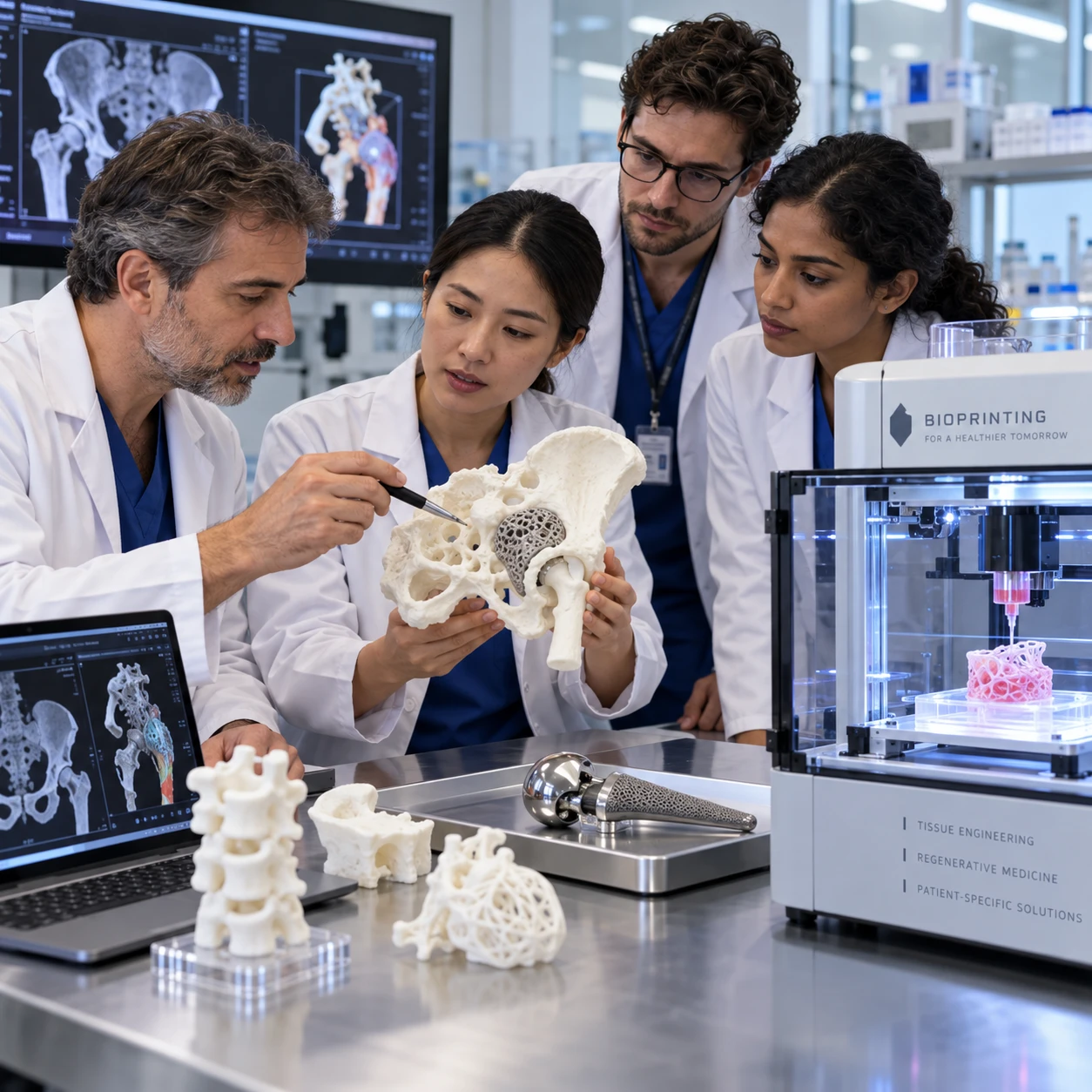
From a prosthetic socket shaped to an individual limb to a model that helps a surgeon plan a complex procedure, 3D printing is changing how some medical devices and tools are designed. The technology also supports research into bioprinting, where cells and biomaterials are arranged in three dimensions. These uses are at very different stages: many printed models and devices already support clinical care, while transplantable printed organs remain a research goal.
What 3D printing means in a medical context
Medical 3D printing is additive manufacturing: a digital design is turned into a physical object by building it layer by layer. Clinicians and engineers create or adapt the design, select a suitable material and printer, then assess whether the finished item meets its intended clinical requirements.
The process often begins with a computer-aided design (CAD) file. For anatomy-based objects, medical imaging such as CT or MRI may provide the data used to build a three-dimensional model. Software processes the image data into a printable shape; a printer then deposits, cures, or fuses material in successive layers. The exact method depends on the object and material, which may include plastics, metals, or specialized polymers.
A printed object can be a planning aid, a medical device, or a research prototype. Those categories matter. A model used to examine anatomy does not have the same role as an implant that remains inside the body, and each brings different requirements for material choice, testing, and regulatory oversight. Printing makes complex shapes easier to produce, but it does not by itself prove an object is safe or effective.
Established applications: prosthetics, models, and surgical tools
Medical 3D printing is used for prosthetics and orthotics, anatomical models, and selected surgical guides and devices. The application determines whether the print directly treats a patient or helps a care team prepare for treatment.
Prosthetics and orthotics can be designed around a person’s measurements and functional needs. A printed component may form part of a prosthesis, brace, or orthotic support. The fit still needs professional assessment: comfort, skin contact, strength, durability, and the person’s activity all matter. A low-cost or quickly produced part is not automatically a clinically suitable one.
Patient-specific models reproduce anatomy for education, communication, or surgical planning. A team might use a model of a bone or organ to inspect spatial relationships before a procedure. These models can make an individual anatomy easier to discuss, but they are aids rather than substitutes for imaging, clinical judgment, or the surgeon’s experience.
Surgical guides and tools may help position or shape instruments in a particular procedure. Some are patient-specific medical devices and require appropriate validation and oversight. An anatomical model used for rehearsal, by contrast, may be classified and managed differently. Understanding that distinction prevents claims about a planning model from being mistaken for proof that a procedure or outcome will improve.
Personalization and patient-specific care
Patient-specific 3D printing uses a person’s anatomy, measurements, or treatment needs to adapt a design. Medical imaging and custom engineering can make a device or planning model more tailored than a standard, one-size-fits-all object, although personalization does not guarantee a better clinical result.
A typical workflow connects several teams: a clinician identifies a need, imaging or physical measurements provide relevant data, and an engineer or trained technician prepares a design. The team checks the digital model, selects the manufacturing method and material, and evaluates the finished item before use. For implants and other devices that contact the body, requirements for testing and documentation are especially important.
Customization can be useful when anatomy is unusual, when a standard device does not fit well, or when a team needs to understand a complex structure before surgery. It can also improve communication: a patient may find a physical model easier to interpret than a scan alone. Yet extra design work takes time, and image data can contain artifacts or capture only part of the clinical picture. Clinicians need to verify that the printed representation is accurate enough for its intended purpose.
A practical way to judge a proposed custom print is to ask three questions: What decision will it support? Does the design reflect accurate, relevant patient data? And who is responsible for checking the object before use? If the team cannot answer these clearly, customization may add complexity without adding meaningful value.
Bioprinting: printing with cells and biomaterials
Bioprinting is a research field that places living cells within or alongside biomaterials to create structured biological constructs. Researchers aim to reproduce aspects of tissue organization, but most bioprinted tissues are not ready to replace organs in routine patient care.
Instead of printing only with conventional plastic or metal, many bioprinting approaches use cell-containing materials often called bioinks. A printer deposits these materials in patterns intended to support cell survival and organization. The materials must work with the cells and the intended tissue environment; printing a shape is only one part of a much larger biological challenge.
Current research explores tissue models for studying disease and testing treatments, as well as constructs that may one day help repair or replace damaged tissue. Researchers must address issues such as keeping cells alive, developing blood-vessel networks, achieving the right mechanical properties, and ensuring that a construct functions safely after implantation. These challenges vary by tissue and cannot be solved by geometry alone.
It is important to distinguish experimental progress from established treatment. Fully functional, transplantable 3D-printed organs are not routine clinical care. Bioprinting remains a promising area of investigation, but a laboratory prototype is not equivalent to a proven therapy approved for patients.
Benefits, limitations, and safety considerations
Medical 3D printing offers design flexibility and the possibility of a closer fit, but it also introduces material, quality-control, and validation challenges. The right question is whether printing is suitable for a specific clinical purpose, not whether the technology can produce an object.
Potential benefits include making complex shapes, adapting devices to individual anatomy, and producing models that support planning or communication. The trade-offs depend on the application: custom design requires reliable data and skilled review, while a specialized material or manufacturing process may make quality assurance more demanding.
Key safety considerations include:
- Material suitability: A material appropriate for a demonstration model may not be safe for prolonged contact with skin or implantation.
- Accuracy and repeatability: Imaging, software processing, printer calibration, and post-processing can all affect the final dimensions and quality.
- Mechanical performance: A part must withstand the forces and conditions expected in its intended use.
- Clinical validation: Teams need evidence that a device performs as intended, alongside appropriate review, documentation, and regulatory oversight.
Regulatory requirements vary by jurisdiction and by the object’s intended use. In the United States, the FDA’s guidance on 3D-printed medical devices discusses considerations for manufacturers and device development. A printed model, a patient-specific surgical guide, and an implant should not be assumed to follow identical pathways.
One common mistake is treating a successful print as proof of clinical suitability. A print may look accurate but fail under load or use an inappropriate material. The correction is to define the intended use first, then verify material, dimensions, performance, and oversight requirements against that use.
What may come next
Future medical 3D printing may expand as materials, imaging workflows, software, and quality controls improve. The likely progress is incremental: better-established devices and models may become more practical, while complex bioprinted tissues will need further evidence before routine use.
Researchers are exploring ways to make printed structures more biologically functional, and manufacturers continue to develop materials and processes for specific medical applications. Digital design tools may also make it easier to move from imaging to a checked, patient-specific model. Each advance still needs testing for accuracy, safety, and performance in the setting where it will be used.
For patients and care teams, the useful measure is not novelty. It is whether a printed object addresses a clear need, fits into a responsible clinical workflow, and has evidence appropriate to its risks. That standard leaves room for innovation while keeping established care separate from promising research.
Frequently asked questions
What is 3D printing used for in medicine?
Medical 3D printing is used to make prosthetic and orthotic components, patient-specific anatomical models, selected surgical guides, and some implants. It is also used in research, including bioprinting experiments.
How are custom prosthetics made?
A clinician or prosthetist assesses the person’s needs and measurements, then a design is created or adapted for the intended function. A printer makes the relevant component, which is inspected and fitted; adjustments may be needed to improve comfort and performance.
Is bioprinting already used to create transplantable organs?
No. Bioprinting is an active research area, but fully functional printed organs are not routine transplant treatments. Researchers are still working on cell survival, blood supply, tissue function, and other safety and performance challenges.
What are the main limitations of medical 3D printing?
Limitations include material constraints, accuracy and repeatability, mechanical durability, production time, and the need for clinical testing and regulatory oversight. A custom shape alone does not establish that a device is safe or effective.