
How AI Is Revolutionizing Diagnostics and Patient Care: A New Era in Medicine
The Shift from Traditional to AI-Powered Healthcare
Healthcare is undergoing its most significant structural transformation in decades, driven by artificial intelligence and machine learning entering clinical workflows at scale. The pressure points are familiar: physician burnout, diagnostic backlogs, rising chronic disease burdens, and health systems stretched thin. AI is being adopted not as a novelty, but as a practical response to these compounding problems.
Traditional diagnostics rely heavily on individual clinician experience, pattern recognition built over years of training, and time-consuming manual review. That model works — until volume exceeds capacity. A radiologist reviewing 200 scans in a single shift faces cognitive fatigue that no amount of expertise can fully offset. AI doesn't replace that expertise; it removes the ceiling on how much of it can be applied consistently.
What's accelerating adoption now is the convergence of three factors: the digitization of Electronic Health Records (EHR), the availability of large labeled medical datasets for training models, and regulatory frameworks beginning to catch up with the technology. The FDA has cleared over 500 AI-enabled medical devices as of recent years, a number that continues to grow as evidence accumulates.
This shift isn't happening uniformly. Large academic medical centers are further along than rural community hospitals. But the trajectory is consistent across the industry: AI is moving from research pilots into standard clinical infrastructure.
AI in Medical Imaging — Seeing What Humans Miss
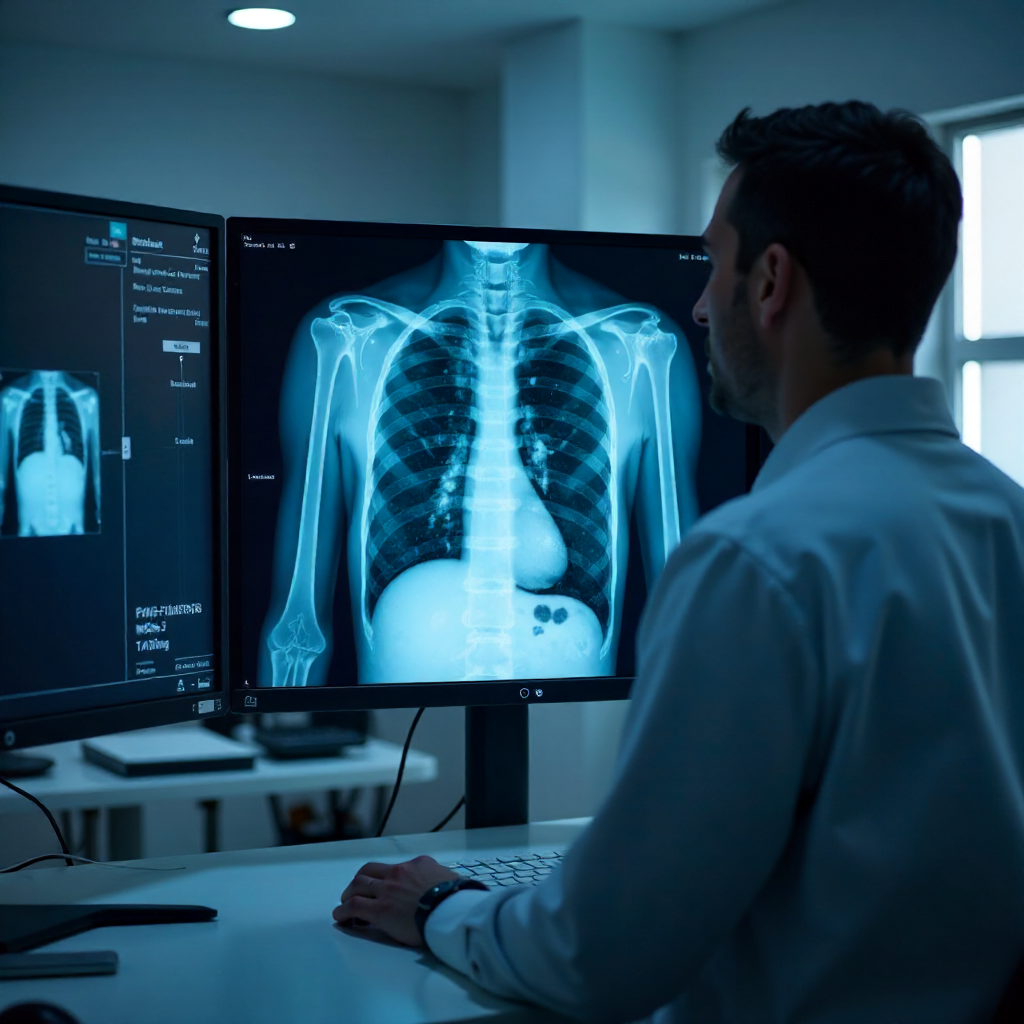
AI's most mature and clinically validated application in healthcare is medical imaging analysis. Algorithms trained on millions of annotated scans can detect anomalies in radiology, pathology, and ophthalmology images with speed and consistency that augments what human specialists can do alone.
In radiology, deep learning models have demonstrated the ability to flag potential lung nodules on CT scans, identify early-stage breast cancer on mammograms, and detect intracranial hemorrhage on brain MRIs — often within seconds. Google's DeepMind developed an AI system that identified over 50 eye diseases from retinal scans with accuracy matching world-leading ophthalmologists. These aren't theoretical benchmarks; several tools are now deployed in active clinical settings.
Pathology is following a similar path. Digital pathology platforms use machine learning to analyze tissue slides, helping pathologists identify cancerous cells and grade tumor severity more consistently. The practical benefit here isn't just speed — it's reducing inter-observer variability, the well-documented phenomenon where two pathologists examining the same slide may reach different conclusions.
One honest limitation: AI imaging tools perform best on data that resembles their training sets. A model trained predominantly on images from high-resolution scanners at urban academic centers may underperform on images from older equipment in different clinical contexts. Validation across diverse patient populations remains an ongoing challenge the field is actively addressing.
Clinical Decision Support — Helping Doctors Make Better Choices
Clinical decision support systems (CDSS) powered by AI analyze patient data in real time to surface relevant insights, flag potential risks, and guide treatment planning. These tools work within existing EHR platforms, making them accessible without disrupting established clinical workflows.
A practical example: sepsis detection. Sepsis is notoriously difficult to catch early because its early symptoms overlap with many other conditions. AI models that continuously monitor vital signs, lab values, and medication records can identify deteriorating patients hours before a clinician might notice the pattern manually. At Johns Hopkins, an AI-powered early warning system demonstrated a 20% reduction in sepsis mortality in a hospital deployment — a concrete outcome tied to real clinical workflow integration.
Beyond acute care, CDSS tools help with medication management. They flag drug-drug interactions, dosing errors based on patient weight and kidney function, and contraindications that might be missed during a busy shift. This isn't replacing physician judgment — it's building a safety net underneath it.
The risk worth naming: alert fatigue. When decision support systems generate too many low-priority notifications, clinicians begin ignoring them — including the important ones. Well-designed AI tools calibrate alert thresholds carefully, prioritizing signal over noise. The systems that have achieved clinical adoption are those that earned clinician trust by being right more often than they were wrong.
Predictive Analytics and Early Disease Detection
Predictive analytics uses machine learning to identify patients at elevated risk for specific conditions before symptoms appear, enabling preventive intervention rather than reactive treatment. This is one of AI's highest-value applications in healthcare — catching disease earlier almost always means better outcomes and lower costs.
Type 2 diabetes is a strong example. Models trained on EHR data — including lab trends, BMI history, medication records, and demographic factors — can identify patients likely to develop diabetes 12 to 24 months before a clinical diagnosis would typically be made. That window is exactly when lifestyle interventions are most effective.
In oncology, AI-driven early disease detection is extending to cancers that have historically been caught late. Liquid biopsy platforms combined with machine learning can detect circulating tumor DNA in blood samples, potentially identifying certain cancers at stage I when surgical cure rates are dramatically higher. Grail's Galleri test, which screens for over 50 cancer types from a single blood draw, represents this approach moving into commercial availability.
Cardiovascular risk stratification is another active area. AI models analyzing ECG data can identify patients at risk for atrial fibrillation or heart failure years before a cardiac event, enabling earlier pharmacological or lifestyle intervention. The Mayo Clinic has published research on AI ECG analysis that detected left ventricular dysfunction — a precursor to heart failure — with high accuracy in patients who appeared clinically normal.
AI and the Patient Experience — From Remote Monitoring to Personalized Care
AI is reshaping the patient experience beyond the clinic walls, through remote patient monitoring, telehealth integration, and personalized treatment pathways that adapt to individual patient data rather than population averages.
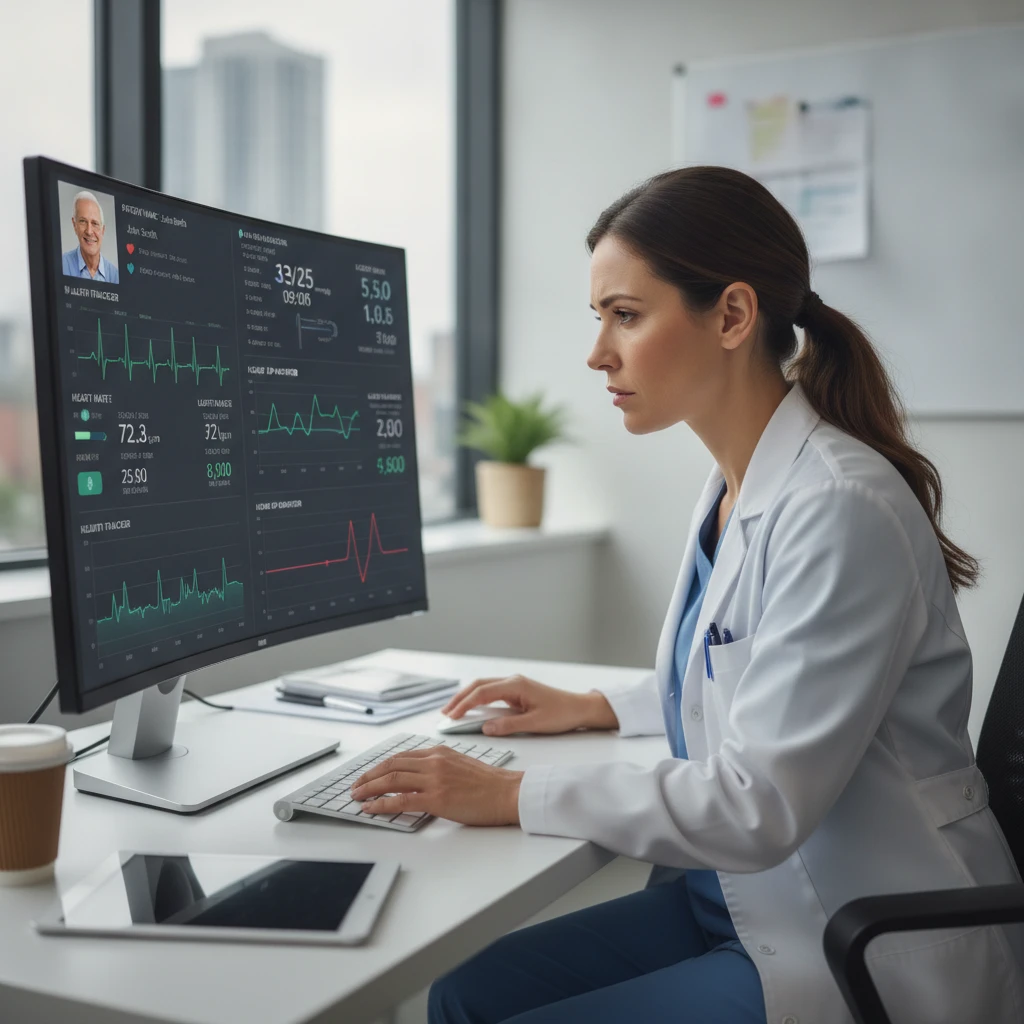
Wearable devices — smartwatches, continuous glucose monitors, cardiac patches — now generate continuous streams of physiological data. AI platforms aggregate and interpret this data, alerting care teams when readings fall outside safe parameters. For patients managing chronic conditions like heart failure or COPD, this creates a layer of oversight that was previously impossible without hospitalization.
Telehealth platforms have integrated AI-powered symptom checkers and triage tools that help patients understand whether their condition warrants emergency care, a scheduled visit, or home management. During periods of high demand, this routing function reduces unnecessary emergency department visits while ensuring genuinely urgent cases get seen faster.
Personalized care is where AI's potential is perhaps most profound — and most nascent. Natural language processing (NLP) tools extract meaningful clinical information from unstructured physician notes, identifying patterns in how individual patients respond to specific treatments. Over time, this builds a richer picture of what works for whom, moving medicine closer to truly individualized therapy rather than protocol-driven averages.
Challenges and Ethical Considerations in AI-Driven Healthcare
AI in healthcare carries real risks that deserve honest examination alongside its benefits. The most significant involve data privacy, algorithmic bias, regulatory oversight, and the irreplaceable role of human clinical judgment.
Algorithmic bias is a documented problem. AI models trained on datasets that underrepresent certain demographic groups — by race, sex, age, or socioeconomic status — can perform less accurately for those groups in deployment. A pulse oximeter algorithm that performs differently across skin tones is one example that received significant attention. Addressing bias requires diverse training data, rigorous subgroup validation, and ongoing post-deployment monitoring.
Data privacy is equally critical. AI systems require access to large volumes of sensitive patient information. Compliance with HIPAA in the US and GDPR in Europe sets baseline protections, but the specifics of how data is stored, shared with third-party vendors, and used for model training require careful institutional governance. Patients increasingly expect transparency about how their health data is used — and that expectation is reasonable.
Regulatory pathways are maturing but still evolving. The FDA's approach to regulating AI as a Software as a Medical Device (SaMD) provides a framework, but adaptive algorithms that update over time present ongoing classification challenges. Clinicians and institutions adopting AI tools need to understand what has been validated, under what conditions, and what the failure modes look like.
None of these challenges are arguments against AI adoption. They are arguments for thoughtful, evidence-based implementation with appropriate human oversight built in from the start.
What the Future Holds — AI as a Standard of Care
Within the next decade, AI will likely be embedded in clinical practice the way EHRs are today — not optional infrastructure, but expected standard equipment. The question is no longer whether AI belongs in healthcare, but how to integrate it responsibly and equitably.
The near-term trajectory points toward AI becoming more ambient — less a discrete tool and more a continuous layer of intelligence running across clinical systems. Imaging AI will be built into scanner workflows by default. Predictive models will run silently in the background of EHR platforms, surfacing alerts only when thresholds are crossed. NLP will convert clinical conversations into structured data in real time, reducing documentation burden significantly.
Longer term, the convergence of genomics, real-world patient data, and AI modeling opens the door to precision medicine at scale — treatment plans calibrated not just to diagnosis but to individual biology, lifestyle, and predicted response. That vision is still partly aspirational, but the building blocks are being assembled in active research programs today.
What won't change is the centrality of the clinician-patient relationship. AI handles pattern recognition at scale. It doesn't hold a patient's hand during a difficult diagnosis, weigh the values and preferences that shape treatment decisions, or take responsibility for care. The most effective implementations of AI in healthcare are those that give clinicians more time and better information — so they can do more of what only humans can do.
Frequently Asked Questions
Is AI replacing doctors in diagnostics?
No. AI tools in diagnostics are designed to assist clinicians, not replace them. They handle high-volume pattern recognition tasks — flagging anomalies in imaging, surfacing risk signals in data — while physicians retain responsibility for diagnosis, treatment decisions, and patient communication. The most accurate framing is AI as a co-pilot, not an autopilot.
How accurate is AI compared to human clinicians in reading medical images?
In specific, well-defined tasks — detecting diabetic retinopathy, identifying lung nodules, classifying skin lesions — AI has matched or exceeded specialist accuracy in controlled studies. In real-world clinical conditions with greater variability, performance tends to be closer to senior specialist level. The key advantage isn't always raw accuracy; it's consistency across high volumes without fatigue.
What types of diseases can AI currently help detect early?
AI-assisted early detection is most advanced in oncology (breast, lung, colorectal, and skin cancers), cardiovascular disease (atrial fibrillation, heart failure risk), diabetic complications (retinopathy, nephropathy), and sepsis in hospital settings. Research is expanding rapidly into neurodegenerative diseases like Alzheimer's using imaging and biomarker data.
How is patient data protected when AI systems are used?
Reputable AI healthcare platforms operate under HIPAA (US) or GDPR (EU) compliance frameworks, requiring data encryption, access controls, and clear data use agreements. Many use de-identified or synthetic data for model training. Patients should ask their providers how AI tools are governed and whether their data is shared with third parties for training purposes.
Are AI diagnostic tools already approved for clinical use?
Yes. The FDA has cleared hundreds of AI-enabled medical devices across imaging, cardiology, radiology, and pathology. The FDA maintains a public database of authorized AI/ML-enabled medical devices, which provides transparency on what has been validated for specific clinical indications. Clearance status and intended use vary significantly between products.