

Innovations in Robotic Surgery: Advancing Precision and Efficiency
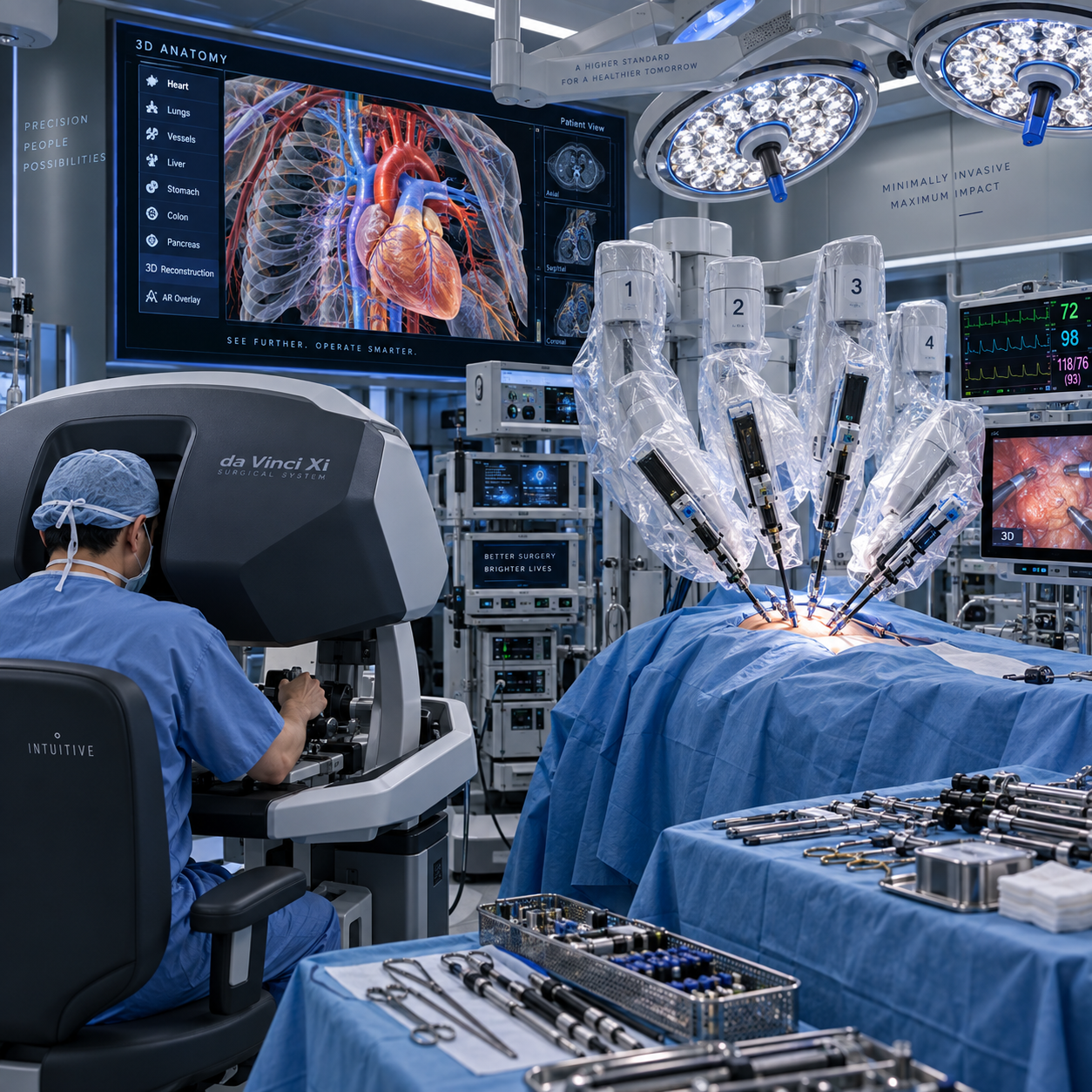
Robotic-assisted surgery is changing how clinicians perform many minimally invasive procedures. By combining a surgeon console, precision instruments, high-definition three-dimensional visualization, and software-based control, modern surgical robotics can support finer movements and more consistent workflows.
These systems do not replace the surgeon. They translate the surgeon’s hand movements into controlled instrument actions while providing tools that conventional laparoscopy may not offer. The practical value depends on the procedure, technology platform, clinical team, and quality of implementation.
How Robotic Surgery Is Evolving
Robotic-assisted surgery uses computer-controlled instruments directed by a surgeon to perform minimally invasive procedures through small incisions. Innovation is making these systems more precise, data-aware, integrated, and adaptable to operating-room needs.
Earlier generations of robotic platforms focused mainly on instrument articulation and improved visualization. Newer systems increasingly connect imaging, planning software, instrument tracking, analytics, and operating-room workflow. This evolution reflects a broader shift from a standalone device toward a coordinated digital surgical environment.
In conventional laparoscopy, the surgeon manipulates long, rigid instruments while viewing a two-dimensional monitor. Robotic assistance can provide wristed instruments, a stable camera, and a magnified three-dimensional view from the surgeon console. Open surgery still offers direct tactile and visual access, so robotic surgery is not automatically preferable for every operation.
The most useful way to assess a robotic platform is through three questions: What clinical problem does it solve? Does it improve access, visualization, control, or consistency? And can the hospital support its training, maintenance, costs, and safe integration?
Technologies That Improve Surgical Precision
Robotic surgery improves precision through enhanced visualization, articulated precision instruments, motion scaling, tremor filtration, and ergonomic surgeon control. These capabilities can help surgeons perform complex movements in confined anatomical spaces.
Three-dimensional visualization and camera control
Three-dimensional visualization gives the surgeon depth perception and a magnified view of anatomical structures. A stable camera controlled through the system can reduce the frequent repositioning associated with handheld laparoscopic cameras. Better visualization may help with dissection, suturing, and identification of tissue planes, although image quality still depends on lighting, anatomy, camera positioning, and the operator’s interpretation.
Articulated instruments and motion scaling
Robotic instruments can articulate inside the body, reproducing some movements of the human wrist at the operative site. Motion scaling allows a larger hand movement at the surgeon console to become a smaller instrument movement, such as translating three centimeters of hand motion into one centimeter at the instrument tip.
Tremor filtration can remove small involuntary hand movements from instrument motion. Together, motion scaling and tremor filtration may support delicate suturing or precise dissection. These features improve control, but they cannot compensate for poor tissue assessment, unclear anatomy, or inadequate surgical judgment.
Surgeon control and feedback
The surgeon remains responsible for selecting the operative approach, controlling instruments, responding to unexpected findings, and managing complications. Haptic feedback, which provides a sense of force or resistance, is an active area of development. Many current systems rely heavily on visual cues and tissue behavior rather than direct touch.
The Role of AI, Automation, and Data
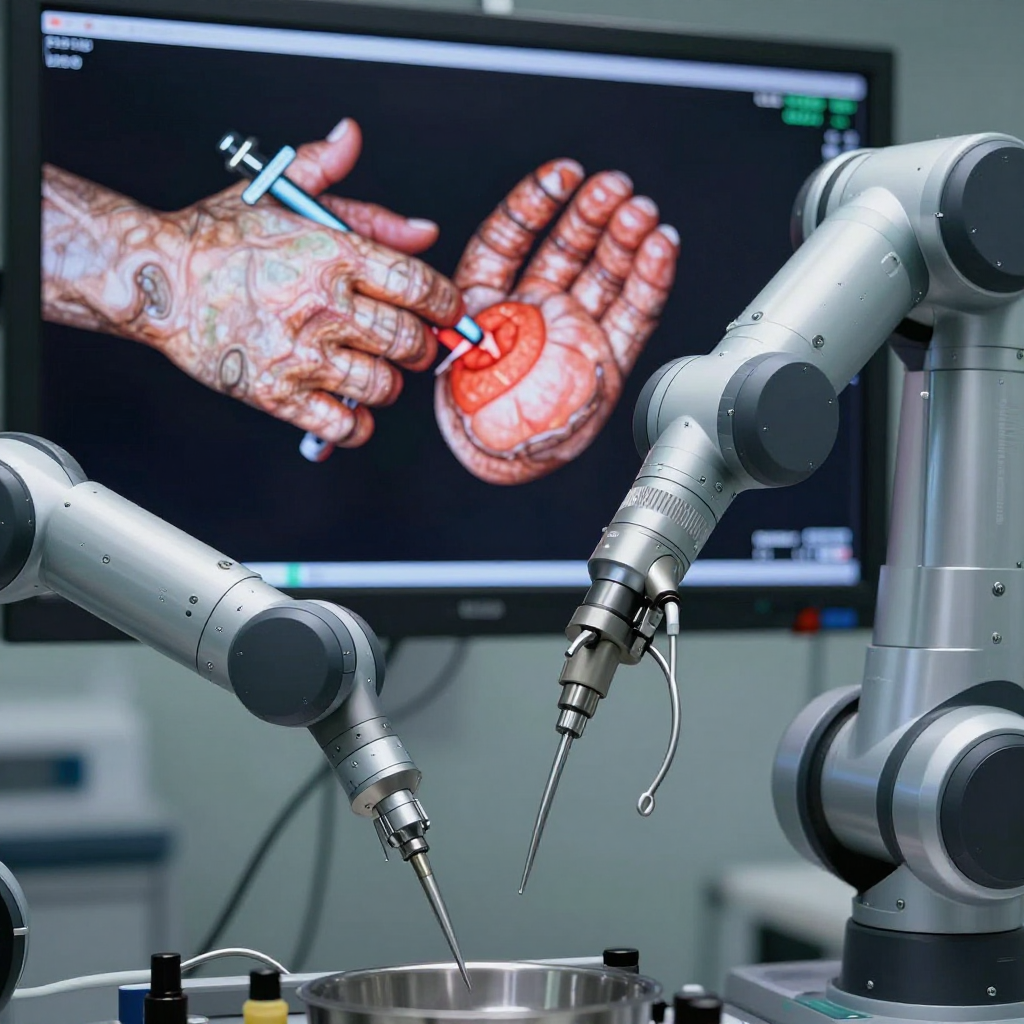
Artificial intelligence and machine learning can support robotic surgery through image guidance, preoperative planning, workflow analysis, and decision support, but current systems are generally assistive rather than fully autonomous. Clinical responsibility remains with trained surgical professionals.
AI-assisted planning may help organize patient imaging, identify relevant anatomy, or create a three-dimensional map before surgery. During a procedure, computer vision can potentially recognize instruments, anatomical structures, phases of an operation, or changes that deserve attention. These functions may reduce information overload when they are accurate, transparent, and properly validated.
Data analysis also creates opportunities for quality improvement. A platform can record instrument movements, operative time, camera use, and procedural milestones. Hospitals may use these data to identify workflow bottlenecks, compare training progress, or investigate variation between cases. However, recorded data require strong cybersecurity, governance, consent policies, and careful interpretation.
Automation works best when it handles bounded, repeatable tasks. For example, software might maintain a camera view, suggest a safe trajectory, or provide alerts based on predefined conditions. Autonomous surgery would require far broader judgment in unpredictable human anatomy and remains a fundamentally different technical and regulatory challenge.
Innovations That Increase Operating-Room Efficiency
Robotic technologies can increase operating-room efficiency by connecting surgical equipment, standardizing preparation, improving instrument management, and making workflow data more visible. These gains are possible only when the technology fits the team’s actual processes.
Integrated operating rooms can link the robotic platform with surgical imaging, patient records, displays, energy devices, and communication systems. A coordinated setup may reduce unnecessary movement and make critical information available at the surgeon console or on shared screens.
Instrument management is another practical area. Clearly defined instrument sets, digital tracking, automated checks, and standardized docking procedures can reduce setup errors and delays. Some newer platforms are designed with smaller footprints or more flexible arm positioning, which may improve access to the patient and surrounding equipment.
Procedure standardization can support consistent team performance. A hospital might create a preparation checklist covering equipment availability, system checks, patient positioning, docking, emergency undocking, and postoperative transfer. Standardization does not mean every case follows an identical script; it creates a reliable baseline for responding to variation.
Remote collaboration and tele-mentoring may also extend specialist support, subject to connectivity, privacy, credentialing, and local regulation. The efficiency question is broader than console time. Teams should measure setup duration, turnover, equipment failures, conversion rates, staff workload, and patient flow before concluding that a platform improves operations.
Potential Benefits for Patients and Care Teams
Robotic-assisted surgery may help patients through smaller access points and reduced tissue disruption, while supporting care teams with better visualization and coordinated control. Recovery and outcome benefits vary by procedure, patient factors, surgeon experience, and comparison with other surgical approaches.
For suitable operations, minimally invasive access can reduce the size of incisions compared with open surgery. This may influence postoperative pain, wound management, mobility, and hospital stay. Yet the robotic platform itself does not guarantee faster recovery. A complex procedure may still involve substantial internal dissection, and patient health can affect recovery more than the access technology.
Care teams may benefit from improved ergonomics. The surgeon operates while seated at a console, with stable camera control and reduced reliance on awkward instrument angles. Better ergonomics can matter during lengthy procedures, although bedside assistants, anesthesiologists, nurses, and technicians still perform essential hands-on work.
Consider a procedure requiring repeated suturing in a narrow space. Articulated instruments and motion scaling may make the task more controlled, while a stable 3D view helps the team coordinate. The result still depends on anatomy, case selection, technical execution, and postoperative care.
Challenges, Limitations, and Implementation Considerations
Robotic surgery faces important limitations, including high acquisition and maintenance costs, training requirements, equipment availability, interoperability challenges, and the need for clinical validation. A sophisticated system creates value only when it improves care safely and sustainably.
- Cost and access: Capital purchase, service contracts, disposable instruments, upgrades, and staff training can place pressure on hospital budgets. Costs may also limit access in smaller or rural facilities.
- Training and learning curves: Surgeons and operating-room teams must learn console skills, docking, troubleshooting, emergency conversion, and communication protocols. Simulation and proctored experience can reduce risk during adoption.
- Workflow disruption: Introducing a robot may initially lengthen setup or turnover. Teams need realistic implementation plans rather than assuming early procedures will be immediately efficient.
- Technical dependence: Software faults, instrument limits, power problems, or communication failures require contingency procedures and rapid access to conventional instruments.
- Interoperability and evidence: Imaging, electronic health records, analytics, and robotic platforms may not exchange data easily. New features should undergo clinical validation before teams rely on them for high-consequence decisions.
A common mistake is judging success by the number of robotic cases alone. A stronger evaluation combines clinical outcomes, complications, conversion rates, patient-reported recovery, operating-room utilization, staff experience, and total cost of ownership. Vendor demonstrations can show capability, but local data determine real-world performance.
The Future of Robotic Surgery
The future of robotic surgery will likely combine smarter assistance, improved haptic feedback, connected operating rooms, and broader access rather than pursue unrestricted autonomy. Progress will depend on clinical evidence, safety engineering, regulation, and equitable implementation.
Future systems may provide more realistic force feedback, allowing surgeons to sense resistance during tissue manipulation. AI may improve anatomical recognition, case planning, and intraoperative alerts. Smaller instruments and more compact platforms could make robotic-assisted surgery practical in additional facilities and procedure types.
Connected operating rooms may combine preoperative imaging, live navigation, instrument tracking, and postoperative analytics. A surgeon could receive context-aware information without leaving the console, while the wider team monitors the same operative plan. These systems must be designed to reduce distraction, since more data can also create cognitive burden.
The strongest innovation will be measured by usefulness at the point of care. A technology that adds precision but slows every case, increases costs, or complicates emergency response may have limited value. The future therefore belongs to platforms that pair technical capability with reliable training, transparent evidence, maintainable infrastructure, and clear human oversight.
Frequently Asked Questions
What makes robotic surgery more precise?
Robotic surgery can improve control through three-dimensional visualization, articulated instruments, motion scaling, tremor filtration, and stable camera positioning. Precision still depends on the surgeon, anatomy, procedure, and clinical setting.
How does AI support robotic-assisted surgery?
AI can assist with imaging, anatomical recognition, procedure planning, workflow analysis, and alerts. Most current applications support surgeons rather than independently performing surgery.
Does robotic surgery always lead to faster recovery?
No. Recovery depends on the operation, patient health, surgical technique, complications, and postoperative care. Robotic access may support minimally invasive treatment in selected cases, but it does not guarantee a shorter recovery.
What are the main limitations of surgical robots?
Key limitations include cost, equipment availability, training requirements, maintenance, limited tactile feedback in some systems, technical failure risk, and uneven clinical evidence across procedures.
How do surgeons train to use robotic systems?
Training commonly combines didactic education, virtual or physical simulation, structured skills assessment, observation, supervised cases, and team-based practice. Safe training also covers emergency undocking and conversion to another surgical approach.